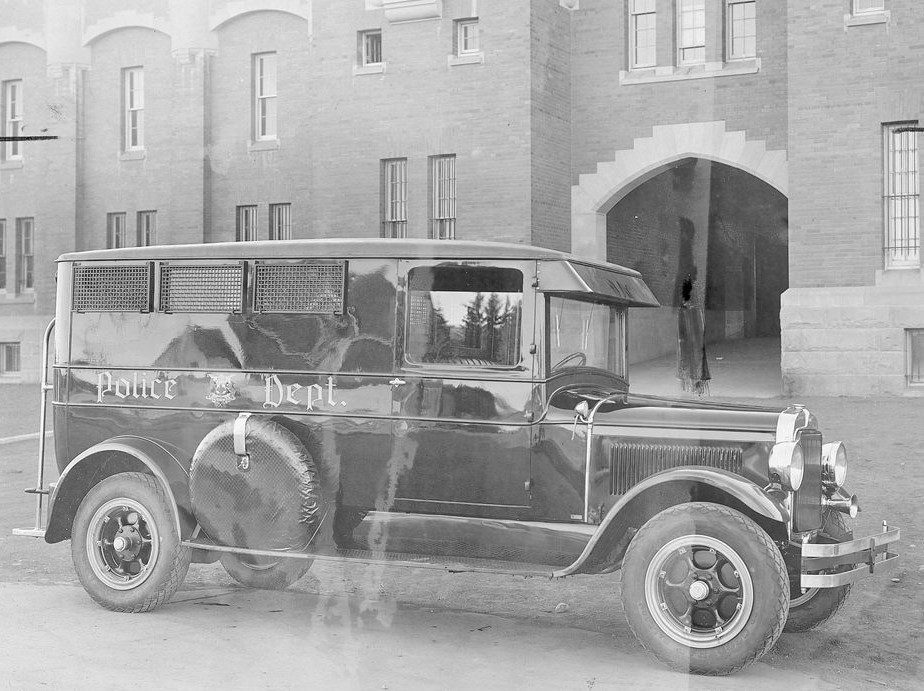

At the beginning of the 20th century, Calgary’s Police Department’s Criminal Identification Bureau used photography to document criminal activity. This photographic record offers a fascinating glimpse into the city’s past and serves as a valuable historical artifact. These images provide more than just moments of arrest and charges; they allow us to trace the cultural evolution of a burgeoning city. Read more about Calgary’s criminal activity in the early 20th century on calgaryes.
A Bit of Context
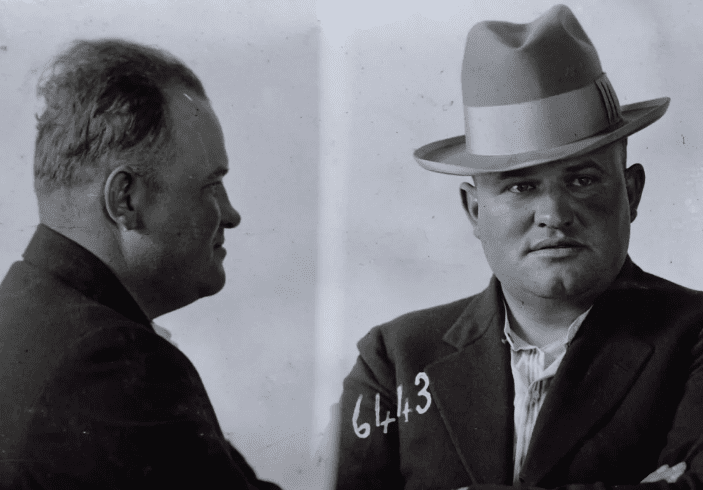
In 1914, Calgary was a rapidly growing city populated by immigrants of diverse races and religions, each arriving with their dreams and goals. Some faced significant challenges in asserting their rights within Canada’s social boundaries.
As evidenced by a photographic book published by CBC, no gender, race, or religion was immune from the law. Charges ranged from prostitution, gambling, theft, and drug use to less harmful offenses like public intoxication. Document forgery was also prevalent, with one notable offender being an American auctioneer named Marcus Edward Whitehead.
Horse Theft

In the 19th and early 20th centuries, owning a horse was a status symbol across Western Canada. For example, the Hudson’s Bay Company, the oldest British fur trading corporation in North America, maintained hundreds of horses to transport goods, enable officers to hunt over vast distances, and plow land for crops. The company fiercely defended its horses from thieves, leading to dramatic confrontations, including hand-to-hand combat in rivers.
The importance of horses on the prairies grew rapidly. Horses allowed Indigenous groups to transport larger supplies over longer distances, revolutionized bison hunting methods, and facilitated swift and decisive warfare.
When European fur traders arrived in the Edmonton area in 1795 and established Fort Augustus and Fort Edmonton, horse culture was at its peak—along with horse theft. Stealing horses was seen as a demonstration of a warrior’s skill and leadership.
The first recorded horse theft in Edmonton occurred in 1799, involving the theft of 20 horses and the killing of two. Correspondence from Hudson’s Bay Company employees is filled with reports of stolen horses by “Stone Indians” and others. To combat these thefts, the company hired dedicated horse keepers.
Similar incidents were recorded in Calgary, including one involving a Canadian farmer named Frank Medicine Shield.
The World’s Oldest Profession
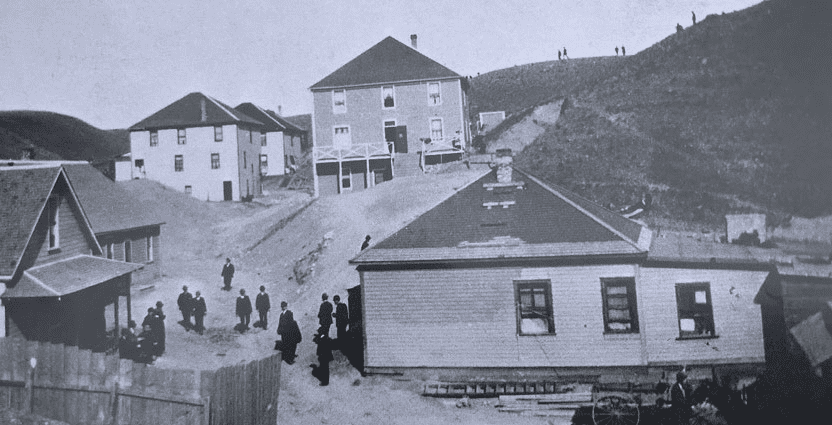
At the turn of the 20th century, Calgary earned a reputation as Canada’s “capital of booze and brothels.” One of the most famous sex workers of the time was a woman known as Diamond Dolly. Her carriage, adorned with diamonds and other flashy decorations, was pulled by a striking black horse. Dolly gestured enthusiastically to her clients as they passed by in the morning.
In the 1910s, the prostitution business flourished. Brothels bore colorful names like Elsie Hall’s, Tootsie’s Place, Flo Smith’s, and Lottie Stewart’s. Many illegal brothels were located along Nose Creek hills, in Bridgeland, Crescent Heights, and other areas across the Bow River that fell outside Calgary Police jurisdiction, as they were considered part of the North-West Territories.
Brothels Along Nose Hill (Now TELUS Spark Science Centre)
These establishments attracted male clientele from all walks of life—travelers crossing the Bow River from noisy saloons, foothill ranchers, and even police officers. One brothel managed by Diamond Dolly boasted a successful sex business. During a raid on her brothel, ten of those arrested were local police officers.
Another well-known Calgary sex worker was Pearl Miller. These women were often resourceful and entrepreneurial, contributing to the city’s economic viability. Most brothel owners in early Calgary were women who displayed the same entrepreneurial spirit as successful male business figures like Patrick Burns, A. E. Cross, or Guy Weadick.
Economic factors often drove women to this line of work. Early Calgary offered few employment opportunities for women, making the sex trade one of the few viable ways to support themselves and their families.
A Den of Evil, Death, and Darkness
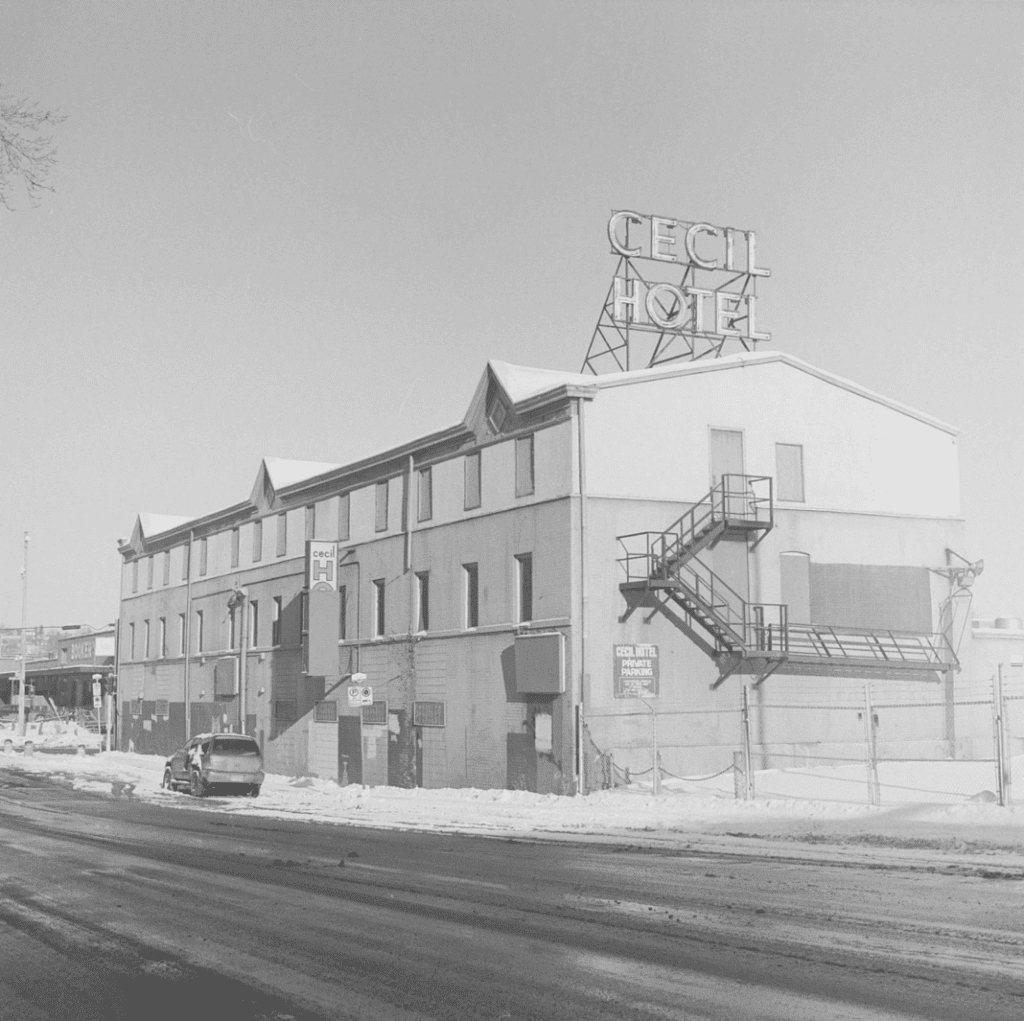
The Cecil Hotel in Calgary evolved over nearly 100 years from a thriving family business to a derelict historic site ultimately demolished due to irreparable damage. This location became synonymous with darkness and death. Built in 1912, it became a hub for prostitution, drugs, and murder.
During Alberta’s Prohibition era, the Cecil opened its doors to patrons, providing a gathering place for residents. Cheap beer drew in crowds, including students.
By the 1940s, LGBTQ+ communities emerged in Calgary and Edmonton, facing government pressure under Premier William Aberhart’s administration. For example, in 1942, a trial in Edmonton involved twelve men connected to a homosexual group. LGBTQ+ individuals sought secret spaces to meet, and the Cecil became one such haven. By the 1960s, it was also frequented by Calgary’s lesbian community, becoming an underground safe space for celebrations like post-softball match gatherings.
Drug use, stabbings, prostitution, and random killings were regular occurrences at the Cecil. These issues worsened during Alberta’s late-1970s to early-1980s economic boom, leading to a surge in social problems.
In 1979, two hotel workers were fatally shot over $100 from the till. By 1982, 2,600 people were arriving in Calgary monthly, increasing the housing crisis and driving crime rates higher. That year, a careless smoker caused a fire on the hotel’s upper floor, sending six people to the hospital and damaging rooms and hallways. This fire later contributed to the building’s inability to be restored.
Newspapers reported on smuggling, arson, and corpses found in the area. By the 1990s, stabbings, assaults, and thefts were so frequent they went uncounted. Daily cleanups involved collecting drug paraphernalia, empty liquor bottles, and used condoms. Women living nearby avoided leaving their homes to protect themselves from assaults. The Cecil became a refuge for addicts and homeless individuals, where violence and sexual harassment were routine.
In 2008, when crime at the Cecil spiraled out of control, police urged the city to declare it a public safety threat. The hotel was shut down that year, and within six months, police recorded a 91% drop in emergency calls. In 2015, this storied yet tragic building was demolished.