
Alberta is a remarkable province known for its stunning landscapes and great people. However, beneath its aesthetically appealing exterior lies a collection of peculiar individuals whose actions both astound and disturb. Explore six of the strangest offenses committed in Alberta’s recent history on calgaryes.
1. Flying on a Lawn Chair
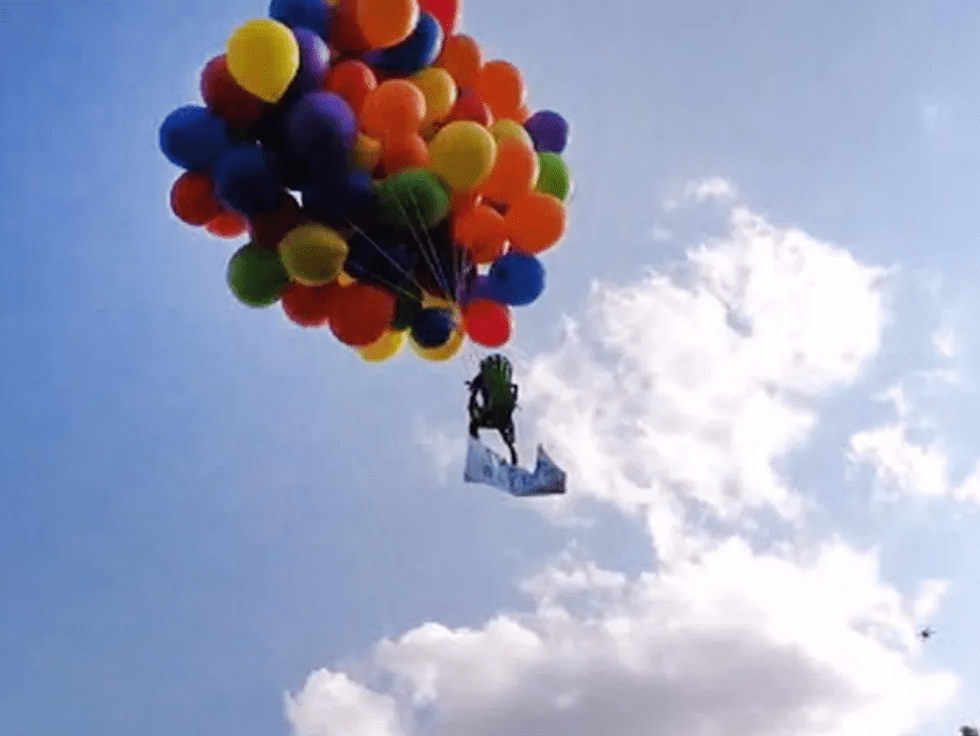
On July 6, 2015, Calgary resident Daniel Boria strapped $12,000 worth of helium-filled balloons to a lawn chair and took to the skies above the Calgary Stampede to promote his cleaning business.
Boria did not obtain any permits for the stunt. After an exhilarating flight and a broken leg from landing, he was arrested and charged with endangering lives and causing property damage under $5,000. Boria paid over $26,000 in fines after pleading guilty to dangerous operation of a homemade aircraft.
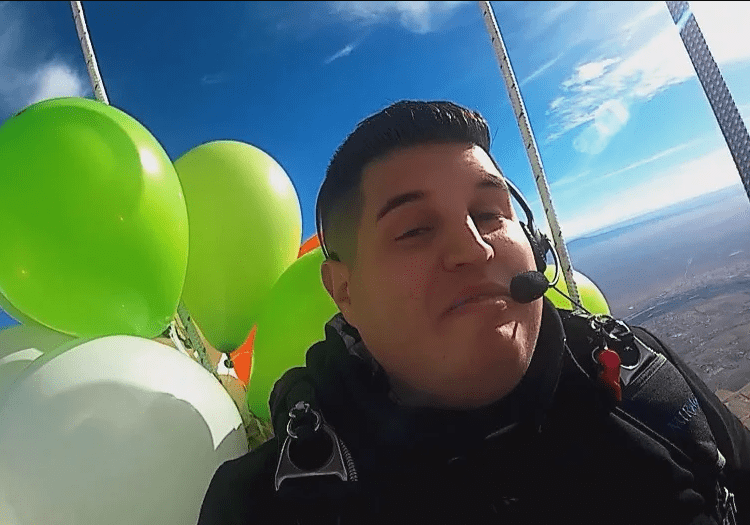
Boria later claimed that his team had planned the stunt to minimize risk to anyone but himself, calling the flight the most thrilling experience of his life. Despite his punishment, he repeated the stunt in 2018 over New Mexico, recording a commercial for his company mid-air. This time, he avoided public spaces and reserved airspace, though equipment malfunctions left him uncertain of his altitude. Eventually, he landed safely in the desert with a parachute. No charges were filed after the New Mexico stunt.
2. The Crane Intruder

Another bizarre Alberta crime occurred on September 19, 2016, when a Calgary man entered the cab of a 26-story construction crane and remained there for three hours.
Electricity to the crane was cut off, leaving the man unable to operate the equipment. A rescue team eventually brought him down. The incident caused temporary closures of the worksite and nearby streets in the Beltline area. Police did not disclose the man’s motives or identity.
3. The Underwear Chewer
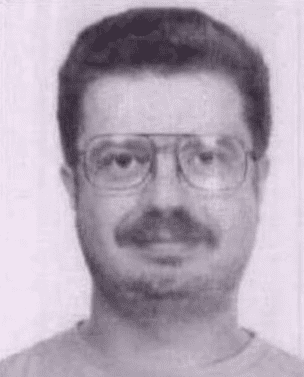
On June 26, 2017, David Zurfluh of Stettler attempted to fool a breathalyzer by chewing on his own underwear, believing the cotton fabric would absorb alcohol. Zurfluh briefly placed the fabric in his mouth before spitting it out. Unsurprisingly, the tactic failed, and he was charged with impaired driving.
4. The Chicken Bandit
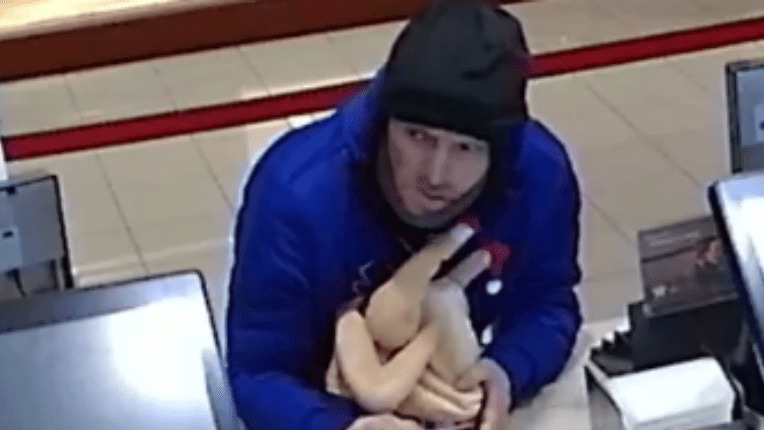
On February 11, 2020, an unidentified man stole a cash donation box from a Tim Hortons restaurant in Airdrie, concealing it with an unusual prop—a rubber chicken.
Surveillance cameras captured the suspect, likely Caucasian, wearing a blue jacket and a black balaclava. He approached the counter, placed the rubber chicken over the donation box, and walked out with it. The Royal Canadian Mounted Police (RCMP) humorously referred to the suspect on Twitter as the “Chicken Bandit.”
5. The Beef and Hot Tub Thief
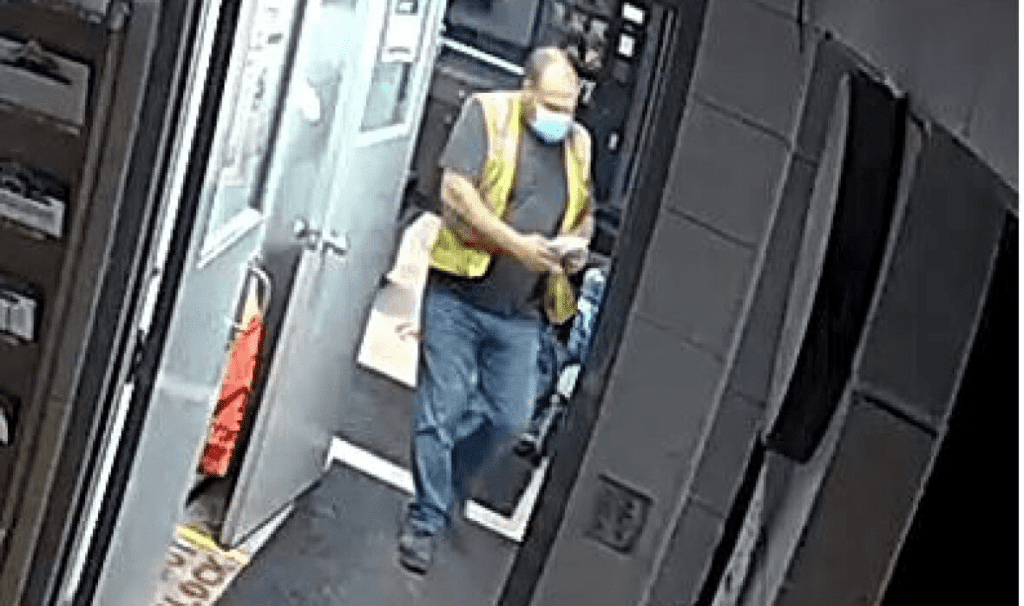
In September 2020, a mysterious individual stole over $230,000 worth of beef from a meat processing plant near Brooks and, three days earlier, seven hot tubs from a manufacturing facility near Edmonton. Both thefts involved trucks registered under fake names and false documents.
The RCMP described the truck used in the meat theft as a maroon semi-truck with a large sleeper pulling a white enclosed refrigerated trailer. The vehicle used in the hot tub theft was a white Volvo with a sleeper cab, towing a new-looking flat deck trailer.
Although the thefts occurred on different days, the suspect was the same individual, described as a tall white male in his 30s or 40s with a strong build and short, slightly balding brown hair. He was wearing blue jeans, a black T-shirt, and a yellow fluorescent vest while covering his face with a surgical mask.
6. The Sleeping Tesla Driver
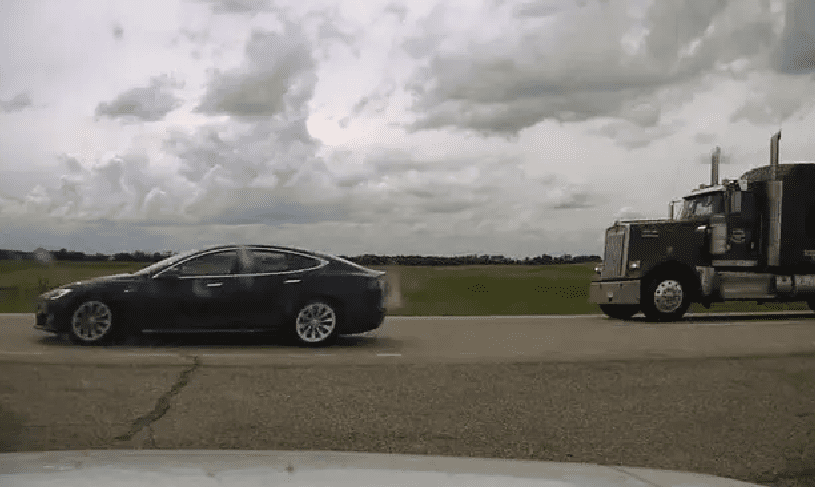
On July 9, 2020, a 20-year-old British Columbia man was caught sleeping while his Tesla Model S sped at 150 km/h on a highway near Ponoka, approximately 100 km south of Edmonton. Both the driver and his passenger were sound asleep in the front seats, seemingly unconcerned.
The speed limit on this section of the highway was 110 km/h. According to RCMP Sergeant Darrin Turnbull, who spoke to CBC, he had never encountered anything like this in his 23 years of policing, most of which he spent in traffic enforcement.
Tesla Model S sedans feature autopilot capabilities, including automatic steering and traffic-aware cruise control, both of which were engaged during the incident. Tesla’s autopilot is designed to keep the vehicle within its lane and at a safe distance from other cars. It can also autonomously change lanes.
When the pursuing officer activated his emergency lights, the Tesla automatically began accelerating after vehicles ahead moved aside. Radar data confirmed the vehicle’s autopilot system had reached exactly 150 km/h. The driver was charged with speeding and had his license suspended for 24 hours. He later faced criminal charges.
Interestingly, this was Canada’s first recorded non-collision incident involving a self-driving car. However, Tesla autopilot systems have been involved in fatal accidents in the United States, raising concerns about the technology’s readiness for real-world use.
Tesla’s autopilot is not a fully autonomous driving system. It combines software, cameras, and sensors to assist drivers and prevent accidents, taking over tasks like lane-keeping and speed adjustments. Drivers are still expected to keep their hands on the wheel and remain attentive to the road to intervene if the system encounters obstacles or dangerous scenarios.