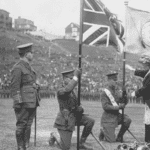

On July 28, 1914, World War I began. By August 4, Great Britain—and by extension, its dominion Canada —declared war on Germany. This period tested all Canadian provinces, including Alberta. Learn more about military recruitment, life in the trenches, and the strategic actions of soldiers in Alberta on Calgaryes.
Overview of the War
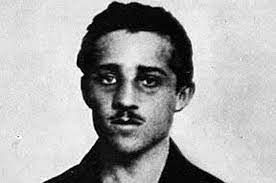
On June 28, 1914, Bosnian Serb nationalist Gavrilo Princip assassinated Archduke Franz Ferdinand, heir to the Austro-Hungarian throne, in Sarajevo, Bosnia. Weeks later, Austria-Hungary declared war on Serbia, accusing it of involvement in the assassination. This event triggered two opposing alliances: the Allied Powers, led by France and Great Britain, and the Central Powers, headed by Austria-Hungary and Germany.
The conflict began in the Balkans, spread primarily across Europe, and later expanded to the Middle East and Africa. It ended on November 11, 1918, with the Allied victory. Known as the Great War, it involved 38 countries and resulted in an estimated 8.5 million military deaths and 13 million civilian casualties. The war dissolved the Austro-Hungarian, Ottoman, German, and Russian Empires and created new nations such as Latvia, Lithuania, Estonia, Finland, and Czechoslovakia. It also set the stage for the decline of the British Empire.
Alberta’s Volunteer Battalions
When communities across Canada began organizing resources for the war effort in August 1914, Albertans readily volunteered to help.
In the early stages of the war, many joined as volunteers. Alberta supported the Canadian Expeditionary Force (CEF), contributing 180 cavalrymen from the 19th Alberta Dragoons, over 400 troops from the Princess Patricia’s Canadian Light Infantry, 900 members from Edmonton’s 101st Militia Regiment, and more than 300 from Calgary’s 103rd Rifles Regiment. By 1916, Alberta had raised 24 battalions, each consisting of 1,000 soldiers.
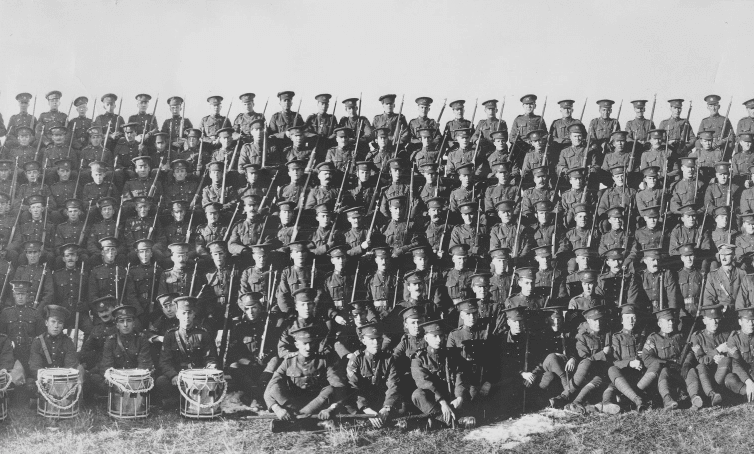
However, upon reaching the trenches, volunteers quickly lost their initial enthusiasm. They realized they were inadequately trained, and equipment, such as the Ross Rifle, proved unreliable. Soldiers endured harsh trench conditions, infested with pests, mud, and constant dampness, along with widespread illness. The sight of wounded and dying comrades further demoralized them.
In letters home, soldiers often expressed their experiences subtly, avoiding explicit details due to censorship. One soldier, Private Maus, wrote to his uncle, “It’s a rather dirty picnic, without fireworks.” This statement humorously hinted at the grim conditions and incessant artillery fire. Albertan soldiers, like their Canadian counterparts, served throughout the four years of trench warfare.
Battalion Organization and Deployments
Some volunteers hoped to fight alongside friends or family, but few battalions remained intact. Units were often disbanded, and soldiers were reassigned to reinforce other battalions. Only four Alberta battalions remained unified and fought on the frontlines at key locations, including Ypres and Passchendaele in Belgium, the Somme in France, and Vimy Ridge. These battalions were Calgary’s 50th Battalion, Edmonton’s 49th Battalion, the 31st Battalion from southern Alberta, and the 10th Battalion, composed of soldiers from Calgary and Winnipeg.
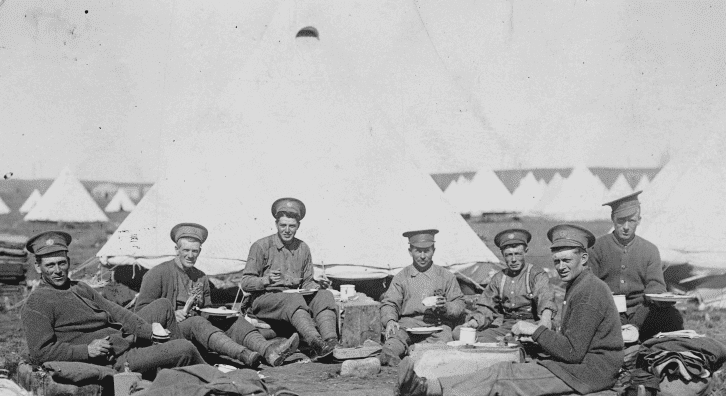
Overall, 49,000 Albertans enlisted, including infantrymen, artillery operators, field hospital workers, and aircraft crews. However, by 1917, enthusiasm for enlisting had dwindled.
The Conscription Crisis
As news of rising casualties reached the home front, recruitment efforts struggled. Prime Minister Robert Borden’s government felt obligated to sustain Canada’s military forces. With voluntary enlistment waning, the idea of conscription—mandatory military service—was introduced.
Despite widespread public opposition, Borden introduced the Military Service Act, which was enacted on August 28, 1917. The goal was to recruit 70,000 new soldiers across Canada, but only 26,000 were enlisted.
All able-bodied men, aged 20–34, who were unmarried or widowed without children, were required to enlist, with few exemptions. In Calgary, 11,953 men applied for exemptions, and 60% of Edmonton’s conscripts were deemed unfit for service.
The Final 100 Days
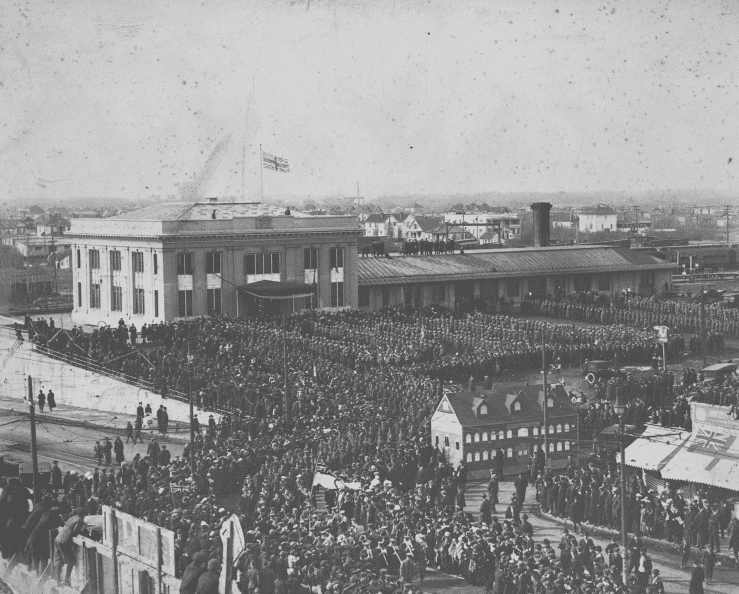
The last 100 days leading up to the November Armistice were among the most grueling. Canadian forces participated in a series of bloody battles in France.
On August 8, 1918, the Battle of Amiens began, marking the first phase of a strategic offensive that would ultimately end the war. Canadian soldiers, supported by British, Australian, and French forces, broke through German defenses on the first day. Albertans of the 10th Battalion of the CEF were the first to achieve their objective, followed by the 31st Battalion. The battle ended on August 12, 1918, with the elimination of the German-held Amiens salient, which had allowed enemy artillery to threaten the strategic Paris–Calais railway route.
The next objective for Canadian forces was the city of Arras, which remained heavily fortified by German defenses. Alberta battalions contributed to securing the Drocourt–Quéant Line, a German defensive network between the towns of Drocourt and Quéant. This breakthrough allowed the Allies to advance toward the German border.
Albertan battalions remained at the forefront during subsequent campaigns, achieving victories at the North Canal, Cambrai, and Valenciennes. They played a significant role in liberating the Belgian city of Mons. As Germany’s allies began to collapse, internal unrest and revolution within Germany led to Kaiser Wilhelm II’s abdication on November 9. Two days later, Germany signed the Armistice of Compiègne, ending the war.
The Aftermath
By the war’s end, approximately 6,140 Albertans had died, and another 20,000 were wounded. One in eight soldiers did not return home alive. Losses were felt across the province. For instance, out of 250 men enlisted from the town of Gleichen, one in five was killed. Edmonton’s 49th Battalion recorded approximately 1,000 casualties, with nearly all soldiers lost.
Veterans began returning home in February 1919, but Alberta was forever changed by the war. Both soldiers and civilians bore the scars of the conflict, profoundly affecting the province’s society and outlook.
Photo: Provincial Archives of Alberta