
Since the establishment of the North-West Mounted Police (NWMP) outpost at the confluence of the Bow and Elbow Rivers in 1875, Calgary has maintained a consistent military presence. Initially named Fort Brisebois after its first commander, the outpost was renamed Fort Calgary in June 1876. For key milestones in the city’s military history, continue reading on Calgaryes.
Early Military Units
At the time of the outpost’s founding, the only formal military presence in the Calgary area was the NWMP garrison. Established in 1873 by Canadian Prime Minister John A. Macdonald, the NWMP served to protect Canada’s sovereignty, curtail illegal trade, and mediate conflicts between settlers and Indigenous Peoples in the North-West Territories, which included present-day Alberta.
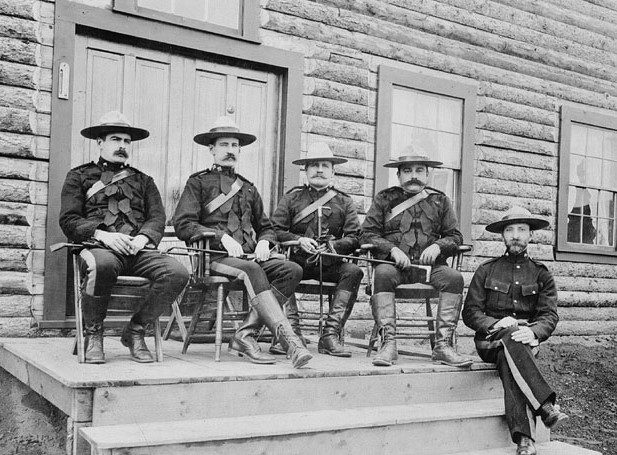
Macdonald feared that killings of American traders by Indigenous groups could lead to U.S. military intervention in Canada. The NWMP functioned as a military, police, and judicial force, with their red uniforms symbolizing British and Canadian military tradition.
The 1885 North-West Rebellion, led by Métis leader Louis Riel in Saskatchewan, prompted the formation of Calgary’s Civilian Home Guard, comprised of volunteers in cowboy attire to symbolize strength and unity with local Indigenous Peoples. While no conflicts occurred between European settlers and Indigenous Peoples, the guard was disbanded after the rebellion.
Calgary’s incorporation as a town in 1894 marked the development of a more formal military presence. The city became home to the Canadian Mounted Rifles Squadron and, in July 1905, the 15th Light Horse Regiment, a cavalry unit under the Non-Permanent Active Militia. Its headquarters was located in a hayloft.
Captain William Charles Gordon Armstrong, the regiment’s adjutant and a city official, lobbied for the creation of an infantry regiment. On April 1, 1910, these efforts led to the establishment of the 103rd Regiment Calgary Rifles, followed by the formation of artillery, engineering, and auxiliary units in Calgary. Soldiers began preparing for World War I, with training conducted at Signal Hill in Calgary.
World War I
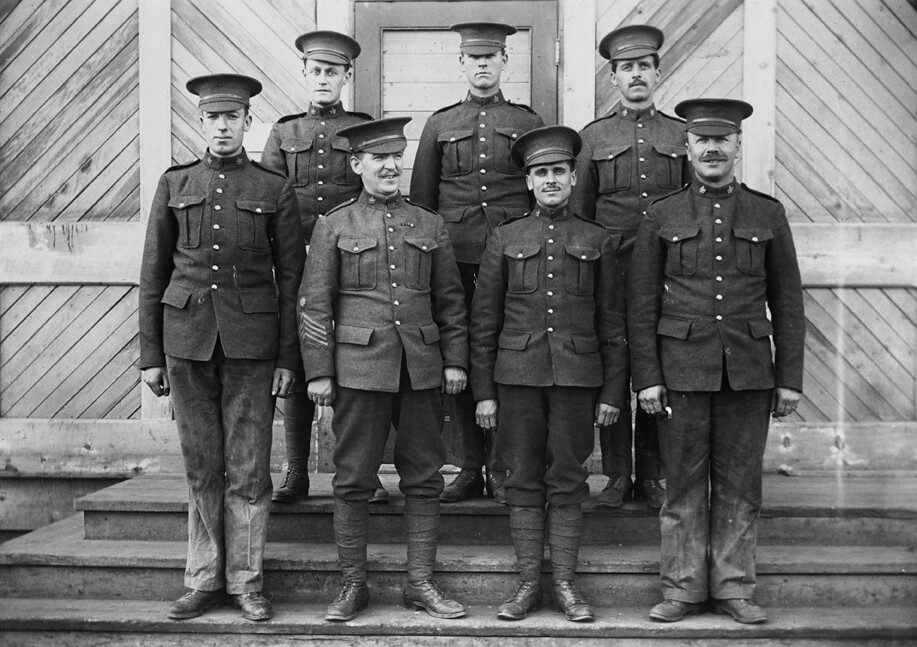
In 1914, Calgary formed the 10th and 50th Battalions of the Canadian Expeditionary Force (CEF). They trained at Sarcee Camp, established in 1910 on land leased from the Tsuu T’ina (Sarcee) Nation. Sarcee Camp was Alberta’s only designated training ground for World War I soldiers and one of the largest in Canada. During the war, it prepared over 45,000 men from 30 units across the province.
Many CEF recruits deployed to Europe served in the Canadian Corps, which played a pivotal role in the victory at the Battle of Vimy Ridge in 1917. This offensive by the British Empire’s forces against Germany was a defining moment in Canadian military history.
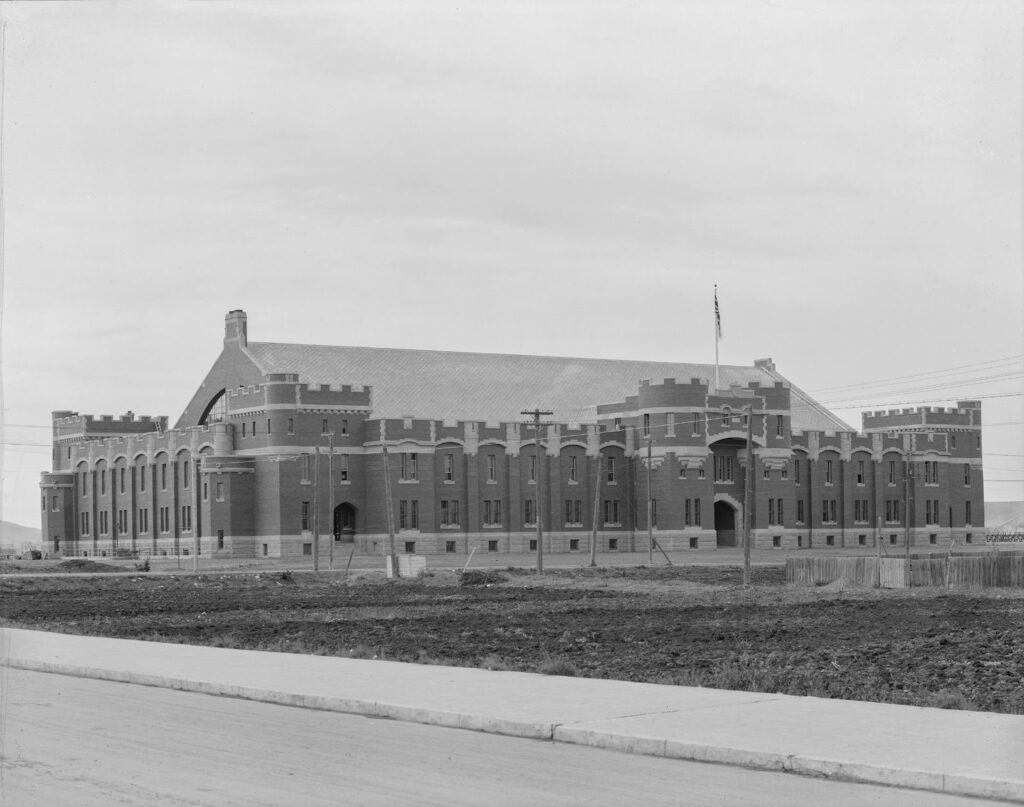
In 1917, Calgary saw the construction of permanent military facilities, including the Mewata Armouries, which housed reserve units and a squadron of regular cavalry. On November 11, 1979, the Government of Alberta designated the site a provincial historic resource.
Post-War Reorganization
Between 1920 and 1921, the Canadian military underwent reorganization. The 103rd Regiment split into two units: the Calgary Highlanders (infantry) and the Calgary Regiment (armored). Additional support units included the 19th Field Brigade of the Royal Canadian Artillery and the 13th Field Company of the Royal Canadian Engineers.
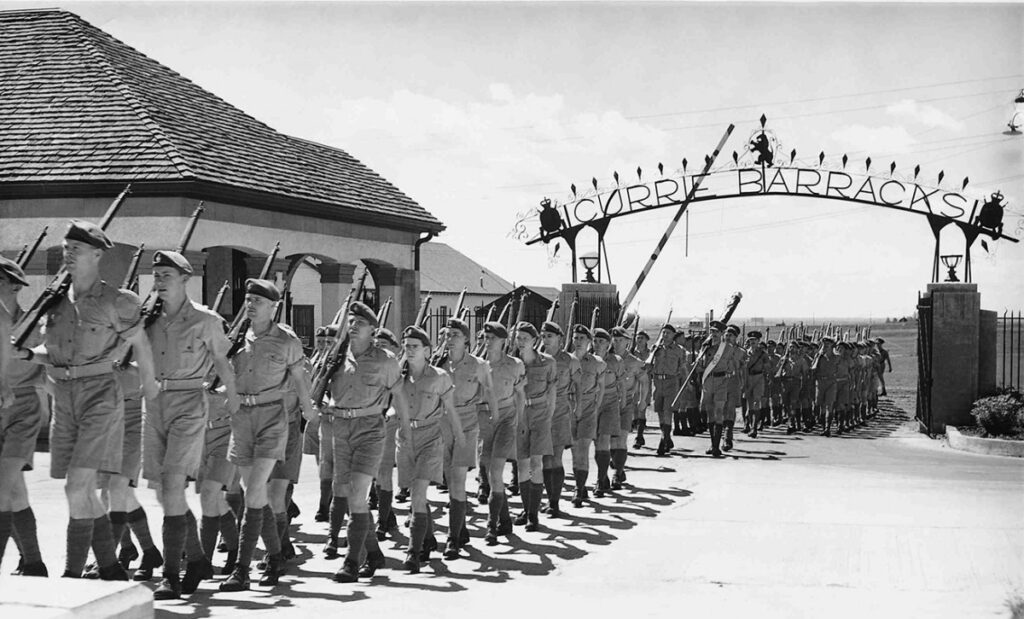
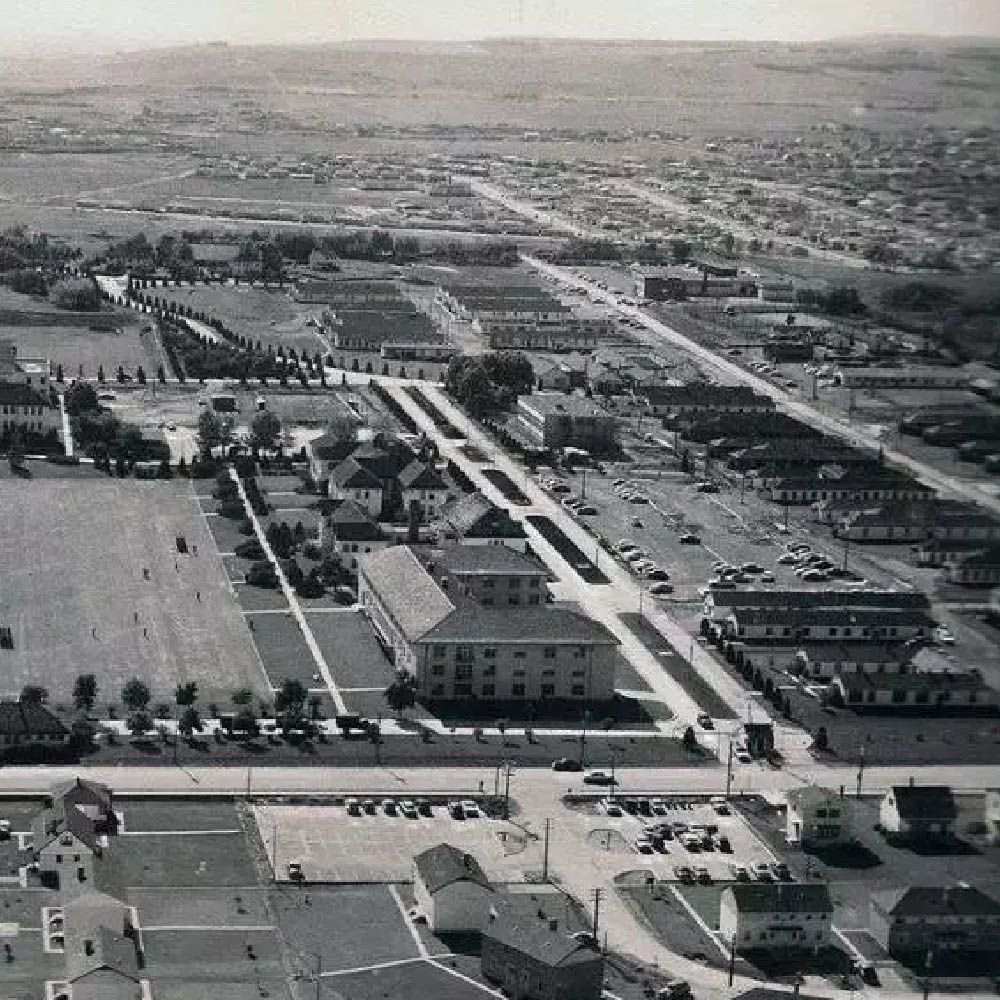
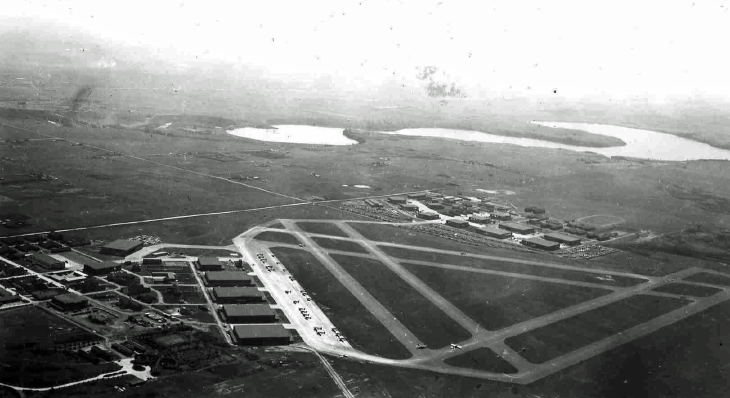
In 1933, the Currie Barracks opened on 47.3 hectares in southwest Calgary, featuring 10 historic buildings and two associated landscapes. The complex, named after General Arthur Currie, trained infantry and airmen prior to World War II. When war broke out in 1939, the facility and other Calgary military units were mobilized.
World War II
From September 1, 1939, many Calgary units joined the Canadian Active Service Forces. The Calgary Highlanders were incorporated into the 2nd Canadian Infantry Division, based in Manitoba. A 2nd Battalion, serving in a militia capacity, operated throughout the war. The Highlanders returned to Calgary in November 1945.
The Calgary Regiment, an armored unit, was mobilized in 1941 as part of the 1st Canadian Tank Brigade (later the 1st Canadian Armoured Brigade). This unit served in Italy and Northwest Europe during the war. Additionally, Calgary hosted a University of Alberta-affiliated Canadian Officers’ Training Corps.
In 1941, Calgary became home to HMCS Tecumseh, a Royal Canadian Navy reserve unit and local recruitment center for the Royal Canadian Navy.
Post-War Military Presence
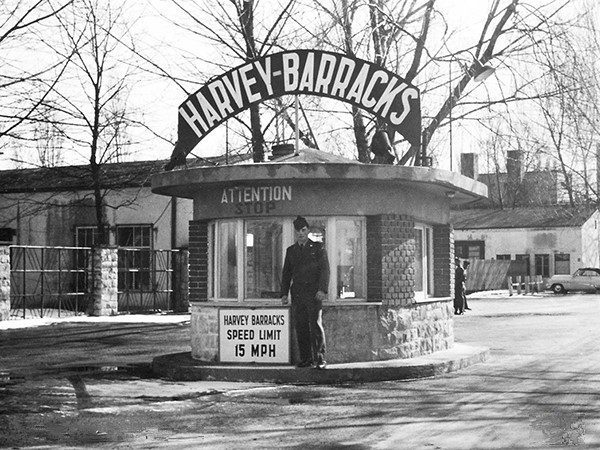
In 1958, Sarcee Camp was reestablished as Sarcee Barracks, featuring a parade ground, shooting range, obstacle course, school, housing, track, and garages. The site merged with Currie Barracks in 1968 to form CFB Calgary, later renamed Harvey Barracks in 1981, in honor of Canadian soldier Frederick Harvey. The land was eventually returned to the Tsuu T’ina Nation, and the base was decommissioned.
Currie Barracks played a vital role in maintaining Alberta’s permanent military presence, fostering connections between military personnel and civilians. It hosted high-profile visitors, including Canadian Governors General and Queen Elizabeth II. The barracks were retired in 1997.
In the 1980s, a second armory was built in northeast Calgary. In 1995, Regular Force personnel relocated to Edmonton, leaving a contingent in Calgary to oversee local militia units.
Calgary in Modern Missions
Following World War II, the Calgary Highlanders contributed soldiers to peacekeeping and other missions in Cambodia, the Persian Gulf, the Middle East, the former Yugoslavia, Sudan, and Afghanistan. In 2008, the regiment supported Canada’s mission in Afghanistan.
Reservists from HMCS Tecumseh also participated in the Gulf War and Afghanistan, as well as disaster relief efforts, including the 1997 Manitoba floods and the 2016 Fort McMurray wildfires.