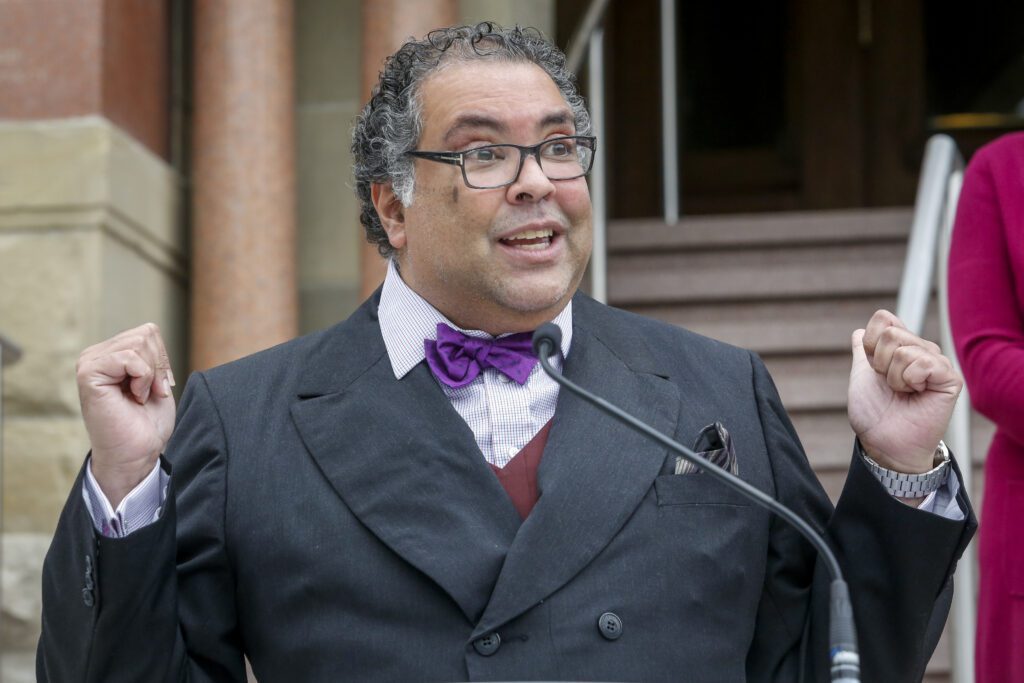

Naheed Kurban Nenshi is a Canadian politician and the 36th mayor of Calgary. He became the first Muslim mayor of a major North American city, serving three terms from 2010 to 2021, before being succeeded by Jyoti Gondek.
Nenshi gained recognition as a pioneer in the use of social media for political campaigns, fostering civic engagement among Calgarians, implementing various large-scale infrastructure projects, and leading the city through four declared states of emergency. These included rebuilding Calgary after the devastating 2013 floods and addressing the challenges of the COVID-19 pandemic. Read more about his life and career on calgaryes.
Early Life and Education
Naheed was born on February 2, 1972, in Toronto to Kurbanali Hussein Nenshi, a businessman, and Nurjehan Nenshi, Ismaili Muslims who emigrated from Tanzania to Canada in 1971, a year before Naheed was born.
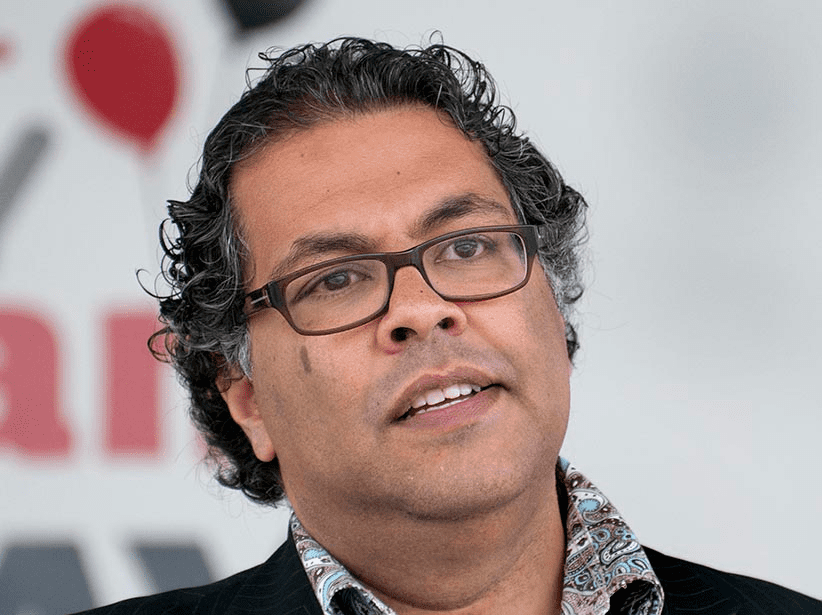
He grew up in the Marlborough neighborhood of Calgary and attended Queen Elizabeth High School, where he participated in debates and theater. Naheed later revealed that his household was steeped in discussions about politics and current affairs, but he never imagined himself as a politician. He aspired to be a journalist or a professor.
Nenshi idolized former Calgary mayor and Alberta lieutenant governor Grant MacEwan, whom he met while graduating from 9th grade. After high school, Nenshi pursued commerce at the University of Calgary, where he became the president of the students’ union. He graduated in 1993 and went on to earn a master’s degree in public policy from Harvard University’s John F. Kennedy School of Government in 1998.
Consultant and Adjunct Professor
After completing his education, Nenshi worked as a management consultant with McKinsey & Company, where he advised large telecommunications companies, banks, retail firms, and oil and gas companies.
In 2001, he founded Ascend Group, his consulting firm, which served clients including the United Nations, the Alberta government, and retail companies. In 2004, Nenshi became an adjunct professor at Mount Royal University’s Bissett School of Business, focusing on nonprofit management and marketing.
Running for Mayor
In 2004, Nenshi made an unsuccessful bid for Calgary’s city council. In 2010, at the age of 38, he entered the mayoral race, aiming to demonstrate to young people that government could be accessible to those with good ideas and intellect, not just wealth.
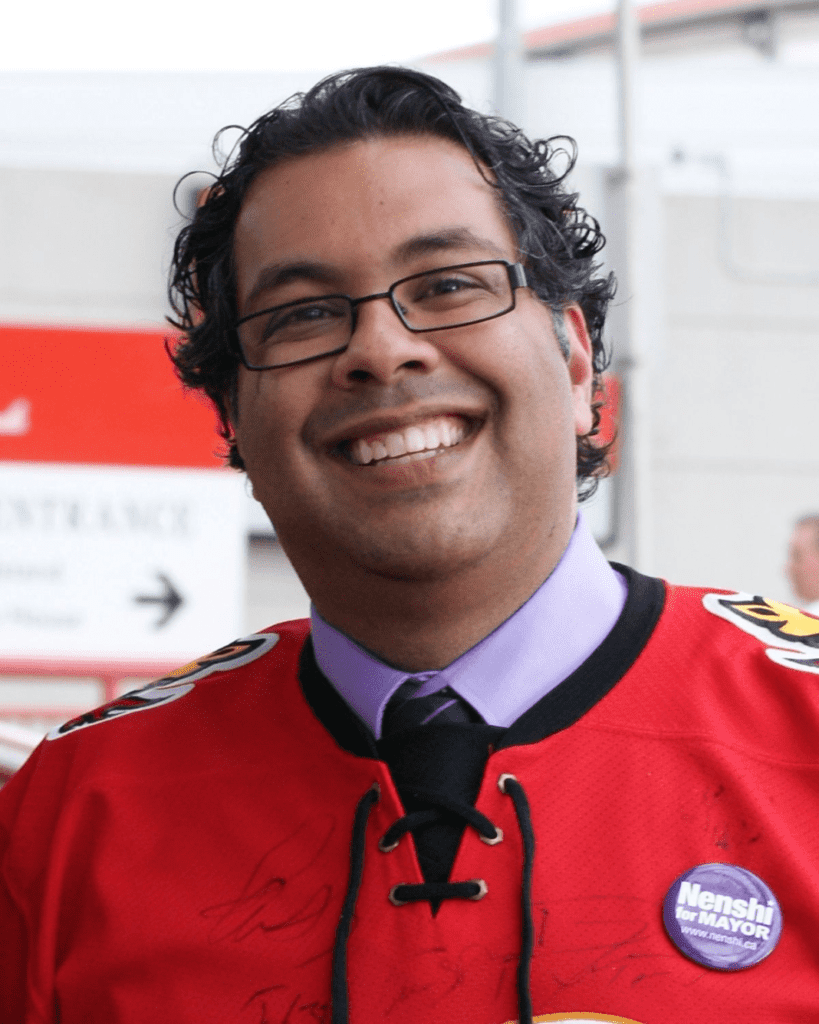
Nenshi competed against alderman Ric McIver and former CTV Calgary news anchor Barb Higgins. Instead of a traditional campaign, he leveraged social media and unconventional methods to connect with voters. His campaign was dubbed the “Purple Revolution,” symbolizing a bridge between liberal (red) and conservative (blue) voters. He hosted about 40 coffee parties in supporters’ homes to share his platform.
A Calgary Herald and CTV poll in September 2010 showed Nenshi with just 8% support, trailing McIver at 43% and Higgins at 28%. However, by October, Nenshi’s popularity had surged, and on October 18, 2010, he was elected Calgary’s 36th mayor with 40% of the vote, nearly 28,000 votes ahead of McIver. He was reelected in 2013 with 74% of the vote and again in 2017 with 51.4%.
Tenure as Mayor
As mayor, Nenshi continued to rely on social media to engage with residents. For example, he used Twitter to mobilize the community during the 2013 Calgary floods, the costliest natural disaster in Canadian history at the time. He urged residents to help their neighbors rather than wait for rescue services. Within 10 days of the flood, his Twitter account gained 28,261 followers.
Throughout his three terms, Nenshi used Twitter to address Calgarians’ concerns, ranging from public transportation issues to parking fines.
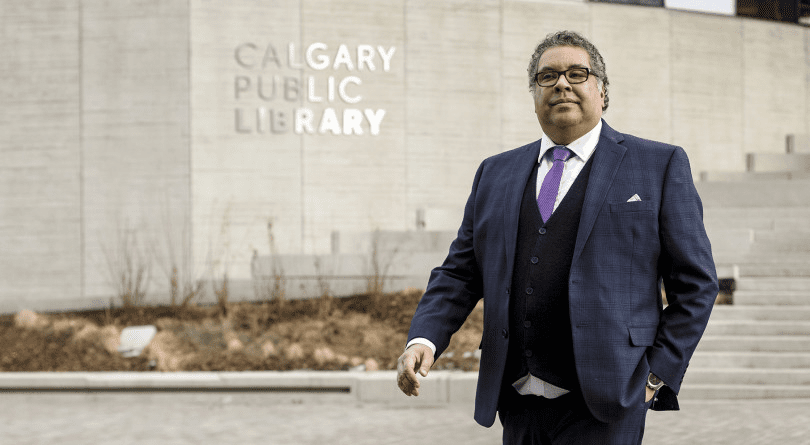
A staunch supporter of Alberta’s oil industry, Nenshi advocated for new and expanded pipelines to transport the province’s oil to external markets. He also oversaw modernization projects, including upgrades to Calgary’s CTrain system, construction of a new airport tunnel, and revitalization of neglected neighborhoods. Under his leadership, projects like Studio Bell, the Central Library, and the redevelopment of East Village came to fruition.
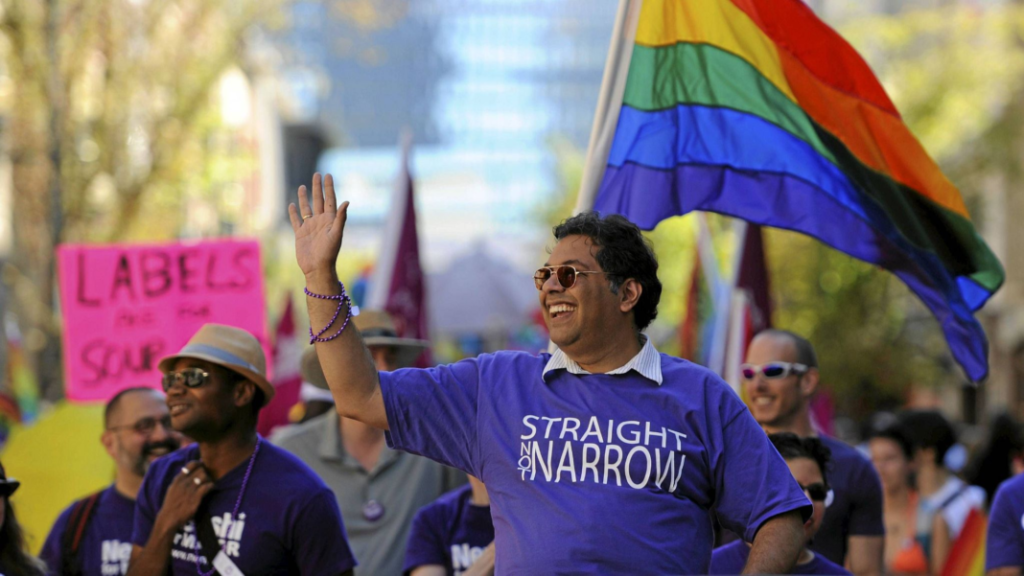
As the son of immigrants, Nenshi championed ethnic and gender diversity in Calgary’s leadership. He was also the first Calgary mayor to serve as grand marshal of the city’s Pride Parade, symbolizing the city’s growing ethnic and political diversity.
During his tenure, Nenshi navigated Calgary through four states of emergency: one for the 2013 floods and three during the COVID-19 pandemic.
To support vulnerable Calgarians during the pandemic, Nenshi spearheaded digital transformation efforts. Calgary became the first Canadian city to move the entire business permitting process online. The city also established mental health and support centers in all public libraries.
Another key achievement was introducing the My Fare app for Calgary Transit in July 2020, enabling passengers to purchase tickets via their smartphones.
Nenshi cited attending community events on Saturdays and participating in celebrations like Canada Day and Neighbour Day as some of his favorite moments during his mayoral terms.
Awards and Recognition
In 2011, Nenshi was named a Young Global Leader by the World Economic Forum and received the President’s Award from the Canadian Institute of Planners the following year. In 2014, he became the first Canadian mayor to win the World Mayor Prize from the City Mayors Foundation, recognizing him as the world’s most outstanding mayor among 120 candidates worldwide. The jury commended his handling of the 2013 floods in Calgary.
“He is a municipal visionary who does not neglect the small details of local governance,” the award citation stated.
For many in North America and even Europe, Nenshi became a role model for his decisive leadership, inclusivity, and forward-thinking policies. In 2017, he received the Peace Patron Award from the Mosaic Institute, a nonprofit organization. Under Nenshi’s leadership, Calgary was frequently ranked as one of the best cities to live in the Western Hemisphere.